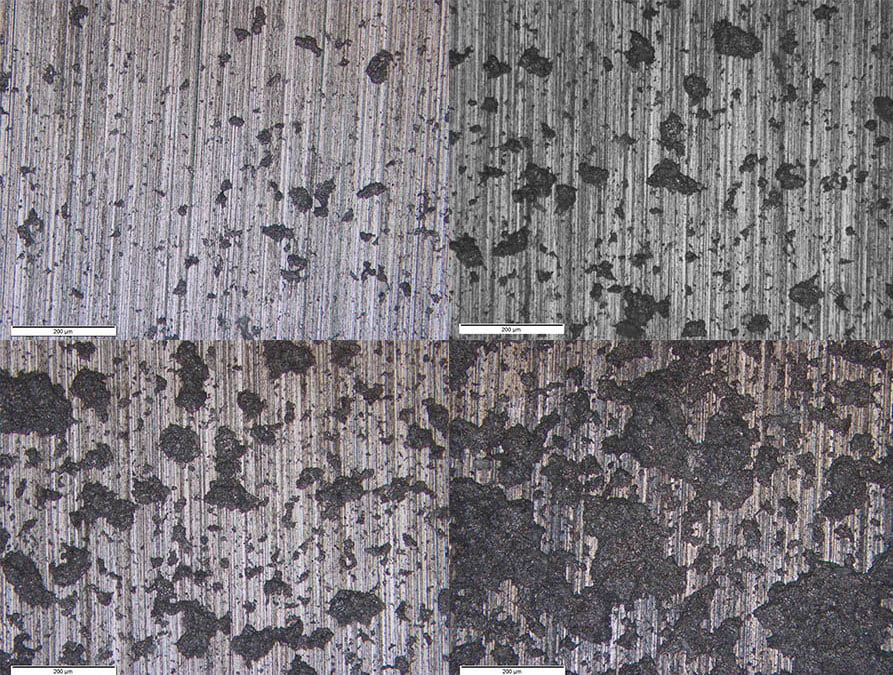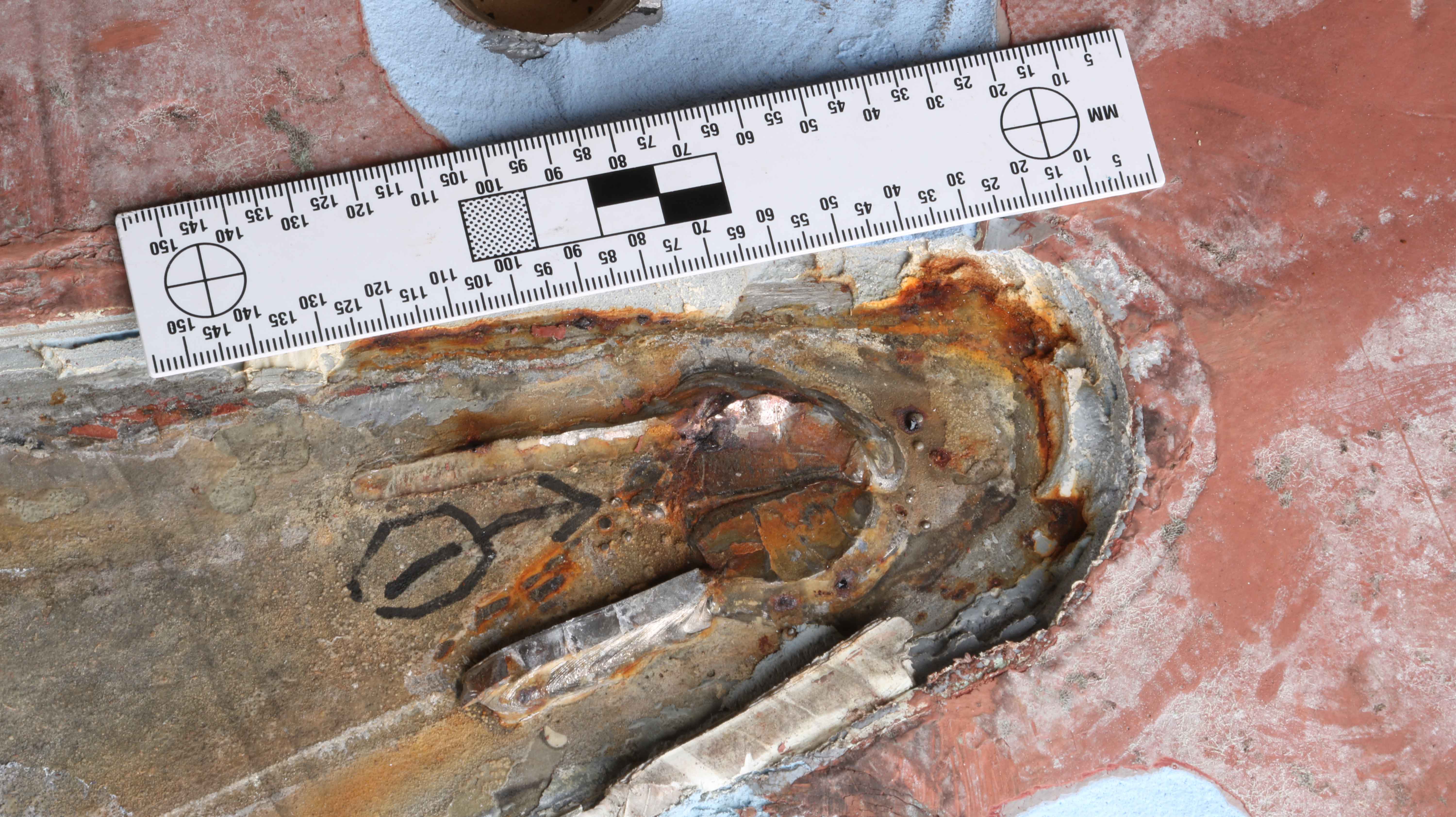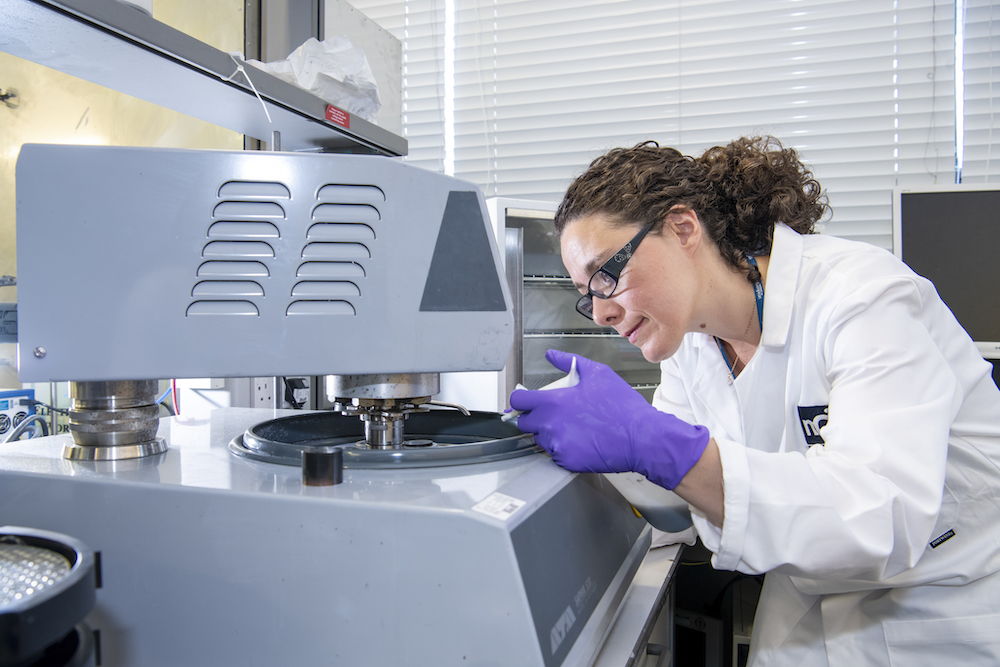


Any product with moving parts will be subject to abrasion and wear. Our bespoke testing and analysis service can give you insights into the abrasion mechanisms at play under specific conditions.
Clients seek our services for various reasons, whether it’s to find the most suitable coating for a new product, to learn whether a product will last for its intended lifespan, to set appropriate inspection and maintenance schedules, or to improve a design where abrasion has caused failure.
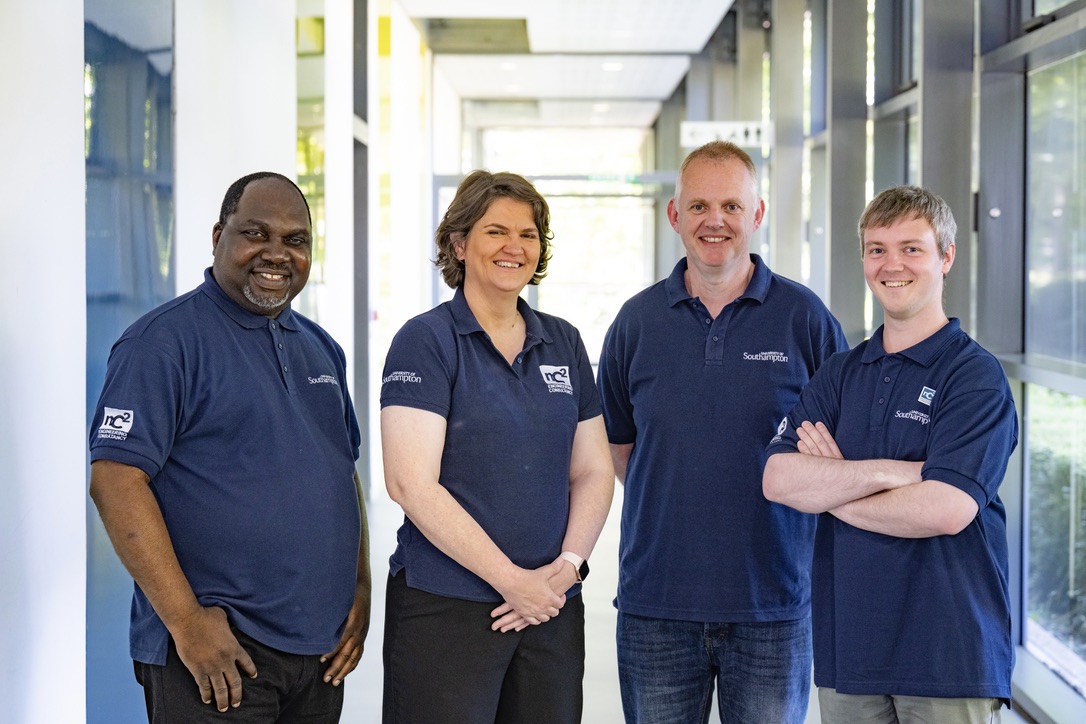
Abrasive wear testing team
We have the facilities to test for different types of wear modes:
- Two-body abrasive wear occurs when two materials rub together and the harder material removes matter from the softer one – like the action of sandpaper on wood.
- Three-body abrasive wear involves loose particles removing material from a surface – for example, sand or grit inside a bearing.
We’ll advise on the right tests for your needs, simulating the required environment as closely as possible in the lab and offering expert analysis of the results.
Our abrasion testing services
Sliding wear testing
We use the TE77, a reciprocating tribometer, to measure the volume loss of material through sliding wear. The loading and speed are computer controlled, allowing us to quickly complete complex testing profiles.
Controllable parameters include:
- type of contact (point, line or area contact)
- reciprocating (back and forth)
- range of stroke lengths and cyclic speeds
- loading to 1,000 N
- temperature, from chilled to 600°C
- lubricated or dry, and/or with added particulates
We also have two pin-on-disc rigs that measure single direction circular track contact.
With the TE77 we can quantify the friction of a pair of materials using high-frequency data collection methods.
Find out more about our friction measurement service.
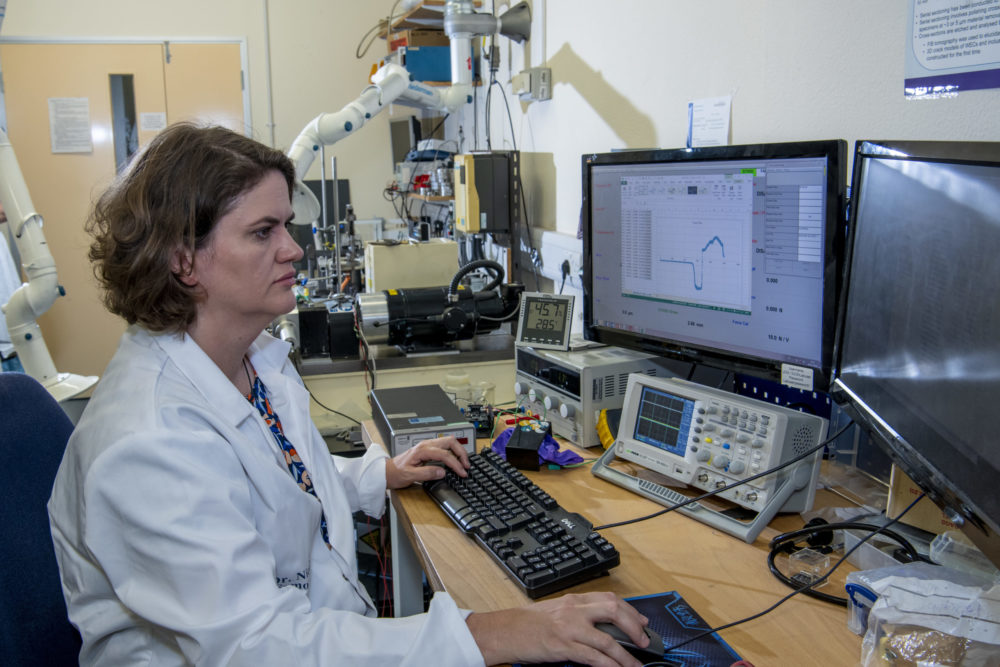
TE77 for sliding wear
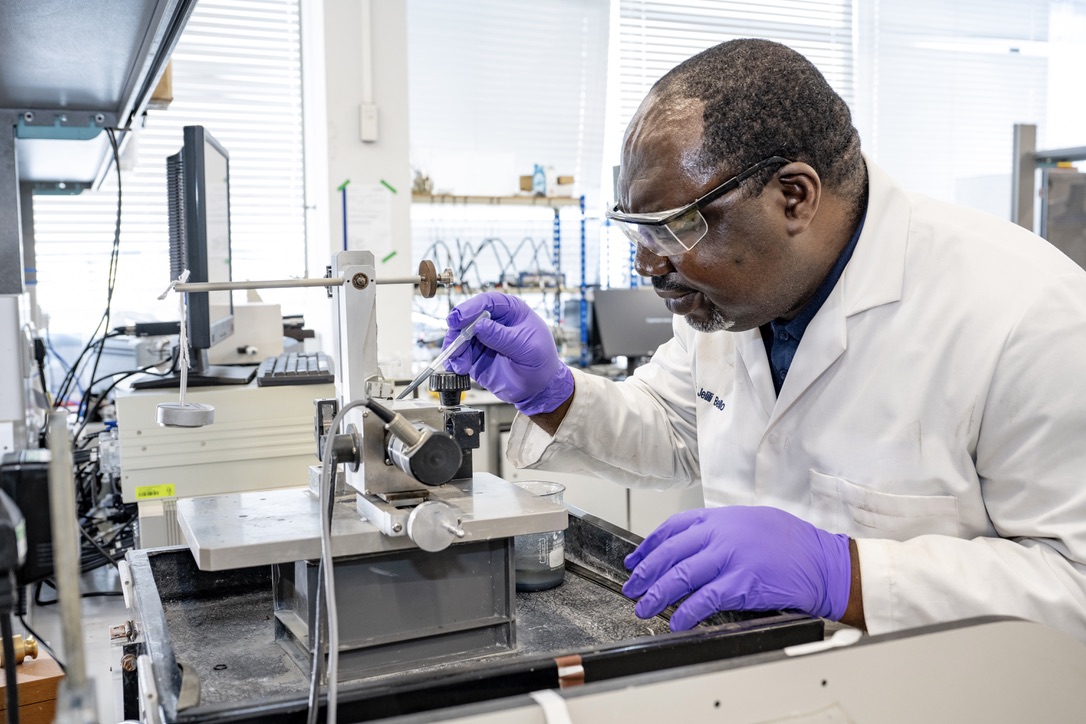
Micro abrasion
Micro-abrasion testing
For this we use a TE66 micro-scale abrasion tester. The material to be tested is loaded against a rotating ball in the presence of an abrasive slurry. This is a reliable method with a high level of test control and repeatability.
Our micro-abrasion testing complies with BS EN ISO 26424: 2016 and has many applications. We can measure the wear coefficient of monolithic materials, hard and soft coatings and accurately determine multi-coating thickness.
It’s an effective way of rapidly screening different samples in order to select the most suitable ones for more detailed tests on the TE77.
Taber Abraser wear testing
We use a genuine Taber Abraser to test the ability of a material or coating to resist abrasion. A flat test specimen is mounted onto a turntable and rotated at a known fixed speed.
The resulting wear tracks can be profiled or evaluated for mass loss or changes in appearance.
We can also evaluate three-body abrasion by introducing grit uniformly and continuously at a specific rate.
There are various standard test methods that are used; the most common are:
- ASTM D4060 Standard Method for Abrasion Resistance Testing of Organic Coatings by the Taber Abraser
- BS ISO 9352 Plastics – Determination of Resistance to Wear by Abrasive Wheels
The Taber Abraser can be used to test to many more standards; a full list can be found on the Taber Industries website.
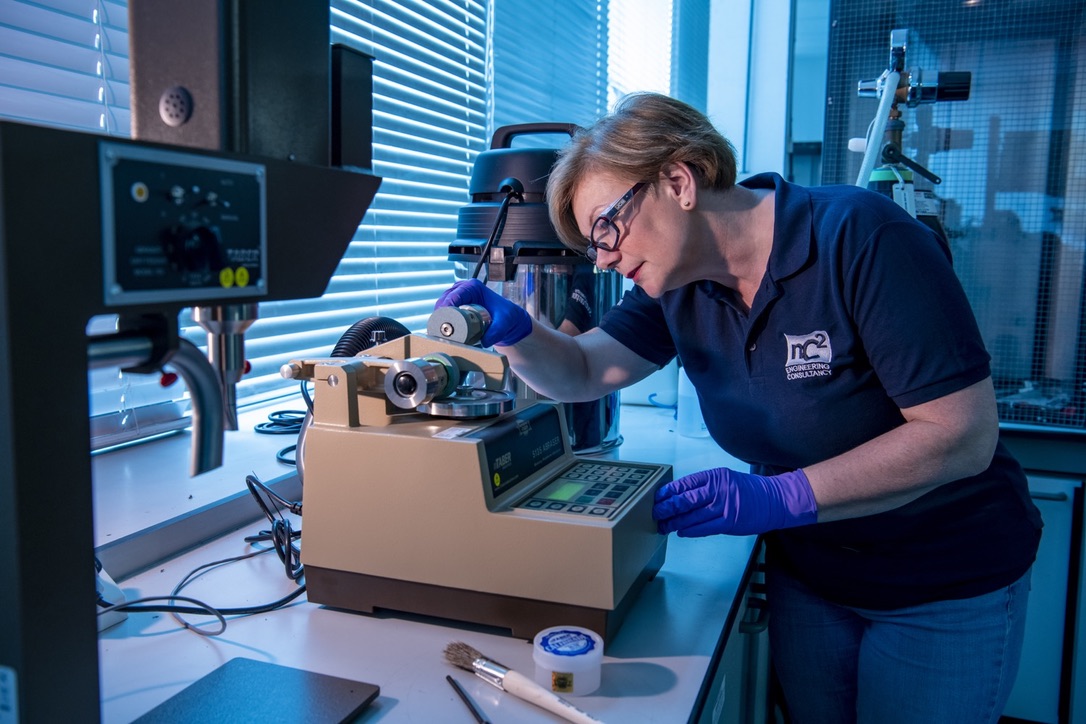
Taber Abraser
Post-test analysis
We analyse the results with our state-of-the-art imaging, microscopy and profilometry equipment. We’ll provide a detailed report and our expert opinion as required to help you decide on next steps.
Meet our abrasion testing expert
JB, Senior Consulting Engineer, is our abrasion and erosion specialist. With more than 16 years’ experience working with industry clients on tribology projects, JB is ideally placed to advise you on the best approach and design the right abrasion tests for your needs. Find out more about JB.

Dr Jelili Bello
What we offer
- Free initial consultation and bespoke quote, which may include free practice tests to determine the best test plan – if you’re not sure exactly what you need, we can advise you.
- A choice of packages to suit your requirements.
- Tests tailored to your needs, run by specialist staff in our state-of-the-art labs.
- A comprehensive report including results and expert advice, plus a meeting to discuss the results.
Why choose nC2?
- A testing and analysis service of the highest quality.
- Access to specialised facilities and knowledge across the University of Southampton.
- Packages to suit your budget and requirements – whether you’re looking for a one-off test or support for a major project.
- Excellent customer service – we’ll keep you in the loop every step of the way.
- High levels of customer satisfaction.
Abrasion testing FAQs
How do you test the abrasion resistance of a material?
Abrasion resistance is assessed by subjecting a sample to controlled wear under defined conditions, such as rotating wheels, abrasive media, or reciprocating (back and forth) motion. The degree of wear is then measured, typically by mass loss, thickness reduction, or visual assessment of surface damage.
What types of abrasion tests do you offer?
nC² offers a range of standard abrasion testing such as micro abrasion (TE66), reciprocating wear testing (TE77) and Taber abrader (abrasion) testing, as well as other techniques tailored to specific materials and applications. The choice of method depends on factors such as material type, expected wear mechanism, and relevant industry standards.
What are the different types of abrasion tests?
Abrasion tests vary depending on how wear is applied. Common approaches include:
- Rotary abrasion (for example, Taber abrader testing)
- Sliding or reciprocating wear tests
- Abrasive media or slurry-based tests
- Scratch and scuff resistance tests
Each method is designed to replicate different types of real-world wear conditions.
What is a Taber abrasion test?
The Taber abrasion test is a widely used method in which a flat sample is rotated under weighted abrasive wheels. As the wheels wear the surface, material loss is measured over a set number of cycles, providing a consistent and comparable measure of abrasion resistance.
Can nC² simulate real working conditions?
Yes. We can design test programmes that replicate specific service environments, including load, motion, contact conditions, and environmental factors. This ensures results are relevant to your actual operating conditions wherever possible. However, it should be noted that it is not always possible to replicate service conditions of components. Sometimes it may be necessary to scale down in service conditions in order to conduct laboratory assessment of materials.
How do I know which abrasion test is suitable for my material?
nC²’s experts can advise on the most appropriate test method based on your material, application, and performance requirements. This may involve selecting a relevant industry standard or developing a bespoke approach to better reflect real-world conditions.
What are the typical test conditions for abrasion testing?
Test conditions vary depending on the method, but will typically include variables such as load, speed or cycle, abrasive type, and duration. For example, Taber abrader tests specify wheel type, applied load, and number of cycles to ensure repeatability and comparability. Other conditions could include slurry concentration, abrasive size and abrasive type.
Can you compare different materials or coatings?
Yes. Comparative testing is a key application of abrasive wear tests. At nC² we can assess and rank the performance of different materials, coatings, or surface treatments under identical conditions to support material selection or product development.
What results will I receive?
In addition to a video briefing where we walk you through the results, you will receive a clear report detailing the abrasion test method, conditions, and results. Outputs may include quantitative data (such as mass loss or wear rate), analysed data, visual assessment of tested samples, and expert interpretation to support your decision-making.
How long does abrasion testing take?
The turnaround time for abrasion testing depends on the method, number of samples, and the level of assessment you require. Individual tests can often be completed relatively quickly, but overall timeframes will reflect the time needed for sample preparation, test cycles, and reporting.